
In healthcare, missed calls are not a small issue. They can lead to delayed communication, frustrated patients, and more pressure on front desk staff who are already trying to manage a high volume of requests. Especially for busy medical centers, a short delay on the phone can affect the entire patient experience.
That was part of the challenge Donna Health Care dealt with – a leading medical center in women’s health with more than 30 doctors and over 8,000 registered patients. As demand increased, the team was facing overloaded support channels, long wait times, and patient complaints about not receiving callbacks.
So in order to improve communication and reduce operational strain, Donna Health Care implemented Aseto’s AI Conversational IVR. The system was designed to answer calls instantly, understand caller intent, respond to frequently asked questions, route calls more accurately, and capture voicemail with transcription and audio.
What Challenges Was the Medical Center Dealing With?
Before the AI system was put in place, the medical center was experiencing several problems. Calls were being left on hold for up to eight minutes and patients were hanging up before even reaching the right person. Support tickets were also piling up, which slowed down response times and made it harder for staff to keep up during busy periods. On top of that, some patients were reporting that they never received a callback after trying to get in touch.
This created a serious challenge for operations to run efficiently. The center needed a way to improve availability and reduce pressure on reception without making the experience feel cold or difficult for patients.
How the AI System Supports the Team
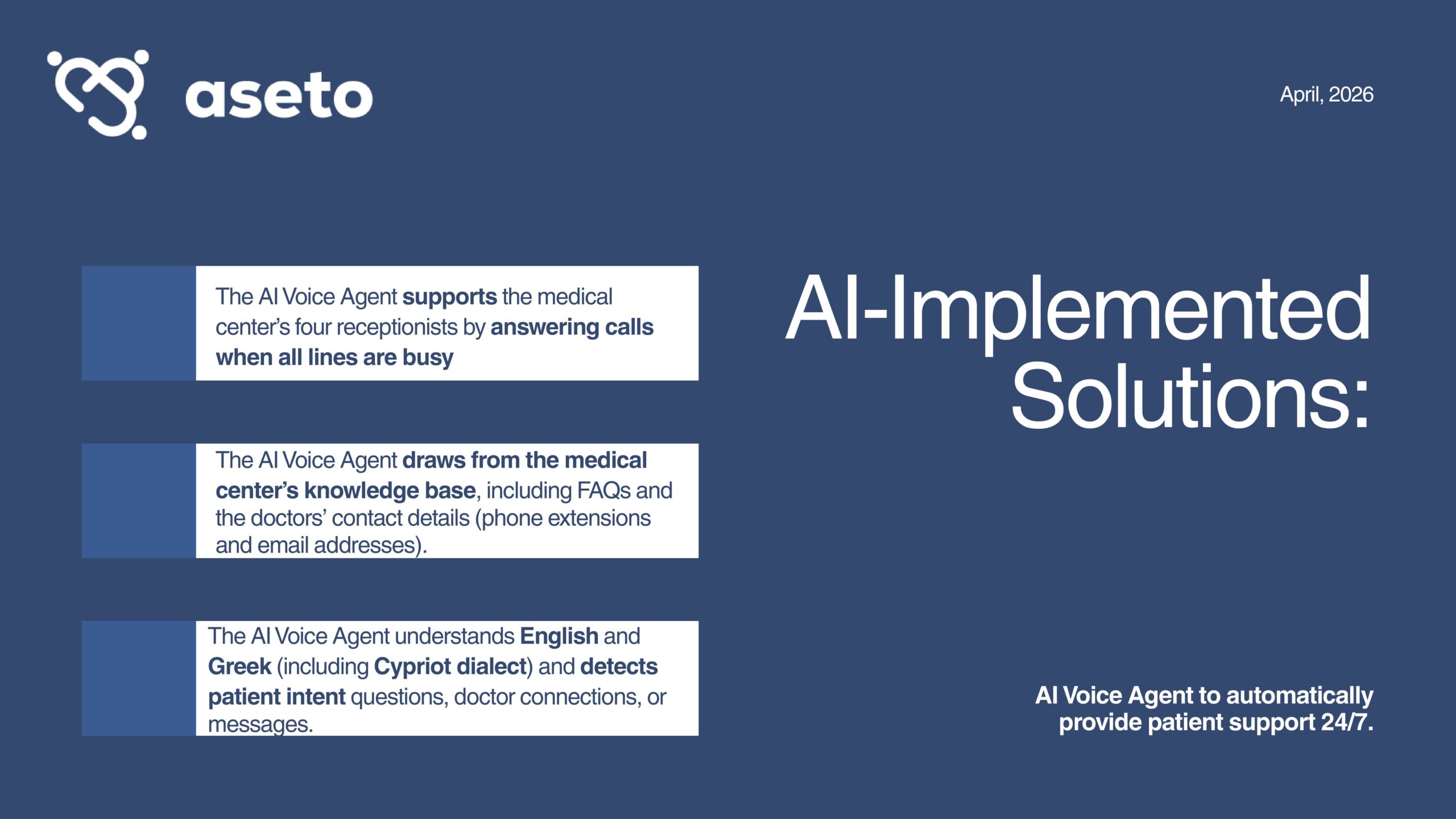
Aseto implemented an AI Voice Agent to provide patient support 24/7 and assist the medical center’s four receptionists when all lines were busy. The system connects to the center’s information, including FAQs and doctors’ contact details such as phone extensions and email addresses. This allows the AI to do more than answer basic calls. It understands what the patient needs, identifies whether the caller is asking a question, trying to reach a doctor, or leaving a message, and then guides the interaction accordingly.
An important part of the setup was language support. The AI Voice Agent understood both English and Greek, including the Cypriot dialect. This particularly matters in healthcare because patients need to feel understood quickly and clearly, especially when they are calling with urgent or personal concerns.
How the Implementation Was Rolled Out
The implementation started with an internal review of the data, then the team focused on the most important use cases first. After that, the AI Voice Agent was set up, introduced gradually into day to day operations, and then monitored as the team became more familiar with the new workflow.
That gradual approach is important because one of the biggest mistakes businesses make with AI is trying to do too much all at once. Here, the focus stayed on the areas where the medical center needed the most support first.
What Were the Findings After One Month?
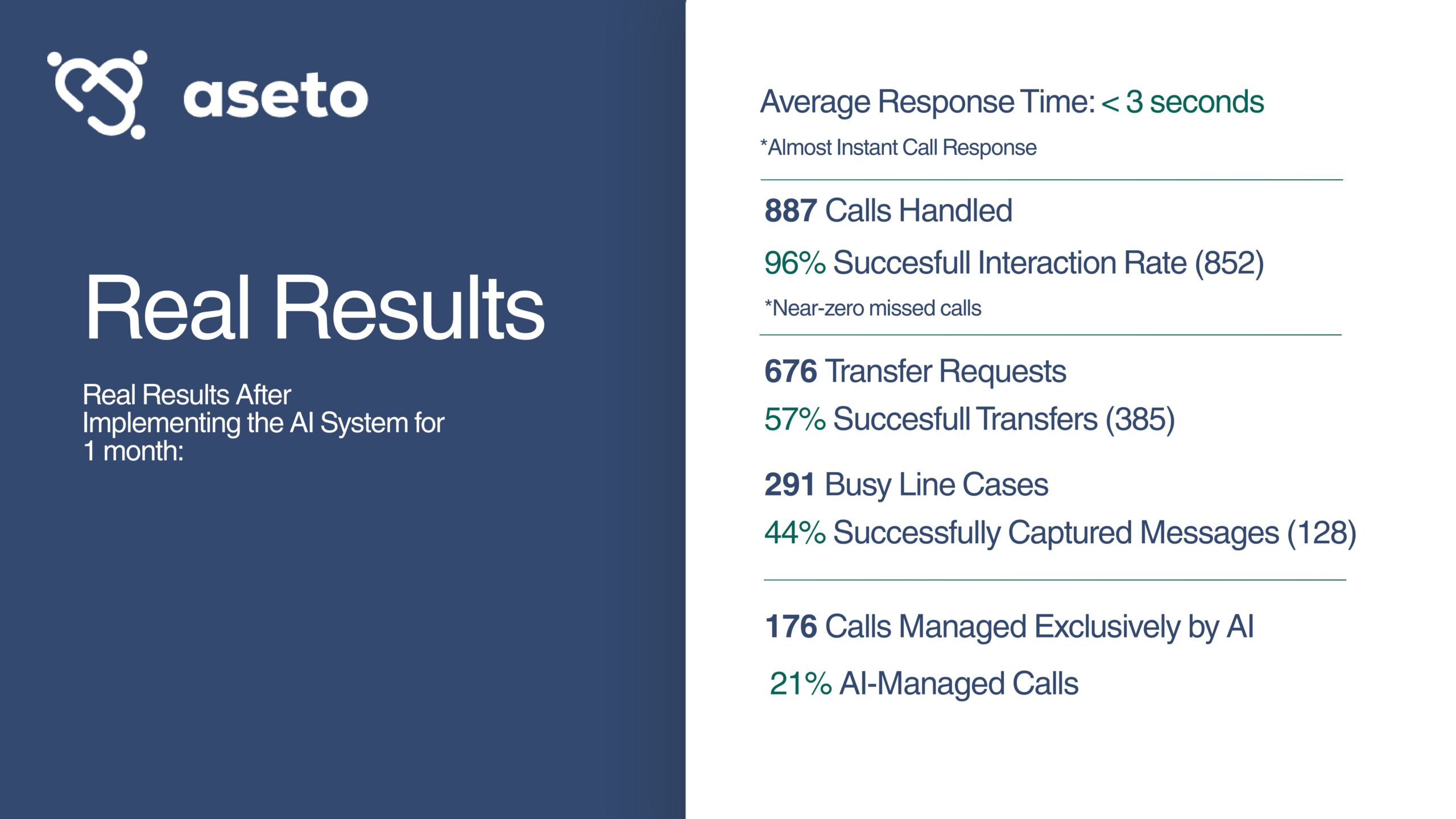
After one month, the system had handled 887 calls with a 96% successful interaction rate, equal to 852 successful interactions. The average response time was under three seconds, which was a significant improvement compared to previous hold times. There were also 676 transfer requests, with 57% resulting in successful transfers, or 385 in total. The system handled 291 busy line cases and successfully captured 128 messages, giving a 44% successful message capture rate.
Another notable result was that 176 calls were managed exclusively by AI, which means 21% of all handled calls did not require direct receptionist involvement. The case study also highlighted nearly zero missed calls and almost instant call response.
What Can Healthcare Teams Gain From This Study?
The most important takeaway is not just that the AI answered calls faster. It’s that the system helped relieve pressure on the human team while improving access for patients. That being said, there is still room for improvement. The transfer success rate and message capture rate show that optimization over time will still matter. Even so, Donna Health Care’s case is a great example of how AI can be a massive asset in healthcare. Not to replace staff, but to support them, improve response times, and reduce missed patient communication.
As your patient demand grows, solutions like this can make a real difference for your clinic. Feel free to reach out to our team at Aseto.ai so we can create a smoother communication experience for your patients.